
SIP trunking is a core part of modern business communication, yet many people still seek basic clarity on it. Questions like how does SIP trunking work, what is SIP trunking used for, and even was ist ein SIP trunk show that users want plain explanations, not technical jargon. This article breaks down SIP trunking in simple terms so business owners, IT managers, and decision-makers can understand how it works and whether it fits their needs.
What is SIP trunking used for?
SIP trunking is used to make and receive voice calls over the internet instead of traditional phone lines. It connects a business phone system (PBX) to the public telephone network using an internet connection.
Businesses use SIP trunking to:
Make voice calls without physical phone lines.
Support remote and hybrid teams.
Reduce phone system cost.s
Scale call capacity up or down as needed
At its core, SIP trunking replaces older ISDN or analog lines with a more flexible, internet-based setup.
Was ist ein SIP-Trunk?
For users searching in German, was ist ein SIP trunk translates to “what is a SIP trunk.” A SIP trunk is a virtual phone line that uses the Session Initiation Protocol (SIP) to connect calls between systems.
Instead of copper wires, a SIP trunk relies on:
An internet connection
A SIP provider
A compatible phone system or cloud PBX
This setup allows multiple calls to occur simultaneously over a single connection.
How does SIP trunking work?
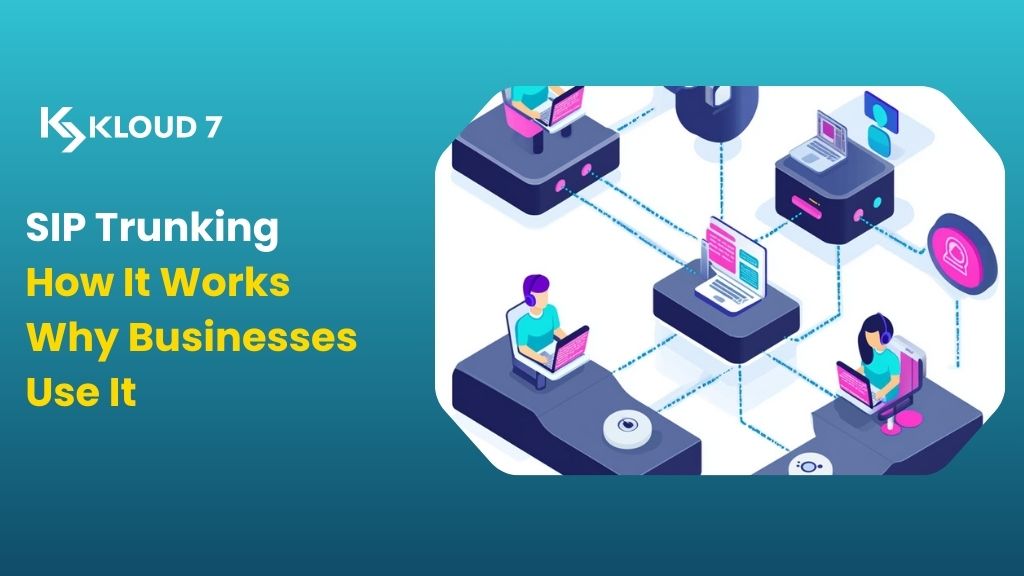
To understand how SIP trunking works, it helps to look at the call flow. When someone places a call, SIP sends signaling messages that set up, manage, and end the call. The actual voice data is then sent over the internet as digital packets.
The basic process looks like this:
A user dials a number from a SIP-enabled phone.
The SIP trunk sends the call request to the provider.
The provider routes the call to the destination network.
Voice data flows between both sides in real time.
This happens in seconds and feels the same to the user as a normal phone call.
How do SIP trunks work with business phone systems?
Many people ask how SIP trunks work with existing systems. SIP trunks connect directly to an on-premise PBX or a cloud-based phone system. Once connected, the SIP trunk handles inbound and outbound calls.
This setup allows:
Multiple extensions share the same trunks.
Easy addition of new users
Support for voicemail, call forwarding, and IVR.
The phone system manages features, while the SIP trunk handles call delivery.
How does a SIP trunk work compared to traditional lines?
When comparing how a SIP trunk works versus old phone lines, the biggest difference is flexibility; traditional systems require one physical line per call. SIP trunks allow many calls to run over a single Internet connection.
That means:
Fewer physical limitations
Lower maintenance needs
Easier upgrades and expansion
This is why many businesses move away from ISDN and analog setups.
How many SIP trunks do I need?
One of the most common practical questions is How many SIP trunks do I need? The answer depends on how many simultaneous calls your business handles, not how many employees you have.
A simple guideline:
One SIP trunk supports one concurrent call
Ten simultaneous calls require ten SIP trunks
Factors that affect this number include:
Peak call volume
Inbound vs outbound call balance
Use of call centers or support teams
Future growth plans
It’s usually better to plan with some extra capacity to avoid busy signals.
Benefits of SIP trunking for growing businesses
SIP trunking fits well with businesses that expect change. It supports growth, remote work, and multi-location setups without complex wiring.
Key benefits include:
Lower call costs
Centralized call management
Geographic number flexibility
Faster deployment than traditional systems
These advantages explain why SIP trunking is widely adopted across industries.
Reliability and call quality considerations
Call quality depends on a stable internet connection and a reliable SIP provider. Proper network setup, bandwidth planning, and quality of service settings help ensure clear audio.
Businesses with high call volumes should also consider redundancy options, such as backup internet connections.
FAQs
Who should consider SIP trunking?
SIP trunking works well for small businesses, mid-size companies, and enterprises that rely on voice communication. It’s especially useful for organizations moving toward cloud systems or supporting distributed teams.
Companies with outdated phone infrastructure often see fast improvements after switching.
What is SIP trunking used for in business communication?
SIP trunking is used to make and receive business calls over the internet instead of traditional phone lines. It supports voice communication, remote teams, and scalable call handling.
How does SIP trunking work with a cloud phone system?
SIP trunking connects a cloud-based phone system to the public telephone network over the internet. SIP handles call setup, routing, and termination while voice data is transmitted digitally.
How many SIP trunks do I need for my company?
The number of SIP trunks you need depends on how many simultaneous calls your business handles at peak times. Each SIP trunk supports one concurrent call, so planning is based on call volume, not employee count.
How do SIP trunks work differently from traditional phone lines?
SIP trunks work over an internet connection rather than physical copper lines. This allows multiple calls to run over a single connection, making scaling easier and more cost-effective.
Was ist ein SIP-Trunk und wer sollte ihn nutzen?
Ein SIP-Trunk ist eine virtuelle Telefonleitung, die Gespräche über das Internet ermöglicht. Er eignet sich für Unternehmen jeder Größe, die ihre Telefonie flexibler und kosteneffizienter gestalten möchten.
Conclusion
SIP trunking simplifies business communication by replacing physical phone lines with flexible, internet-based connections. Understanding how SIP trunking works, how SIP trunks integrate with phone systems, and how many SIP trunks a business needs helps businesses make informed decisions. With the right setup and provider, SIP trunking supports clear calls, lower costs, and future growth.
If you’re exploring SIP trunking or planning to upgrade your business phone system, Kloud7 can help you choose the right setup and capacity for your needs. Reach out to our team to get clear guidance and dependable SIP trunking solutions that support your communication goals.